
What Are Georgia’s Liability Laws for Self-Driving Car Accidents?
Hoffspiegel Law Blog
October 3, 2025
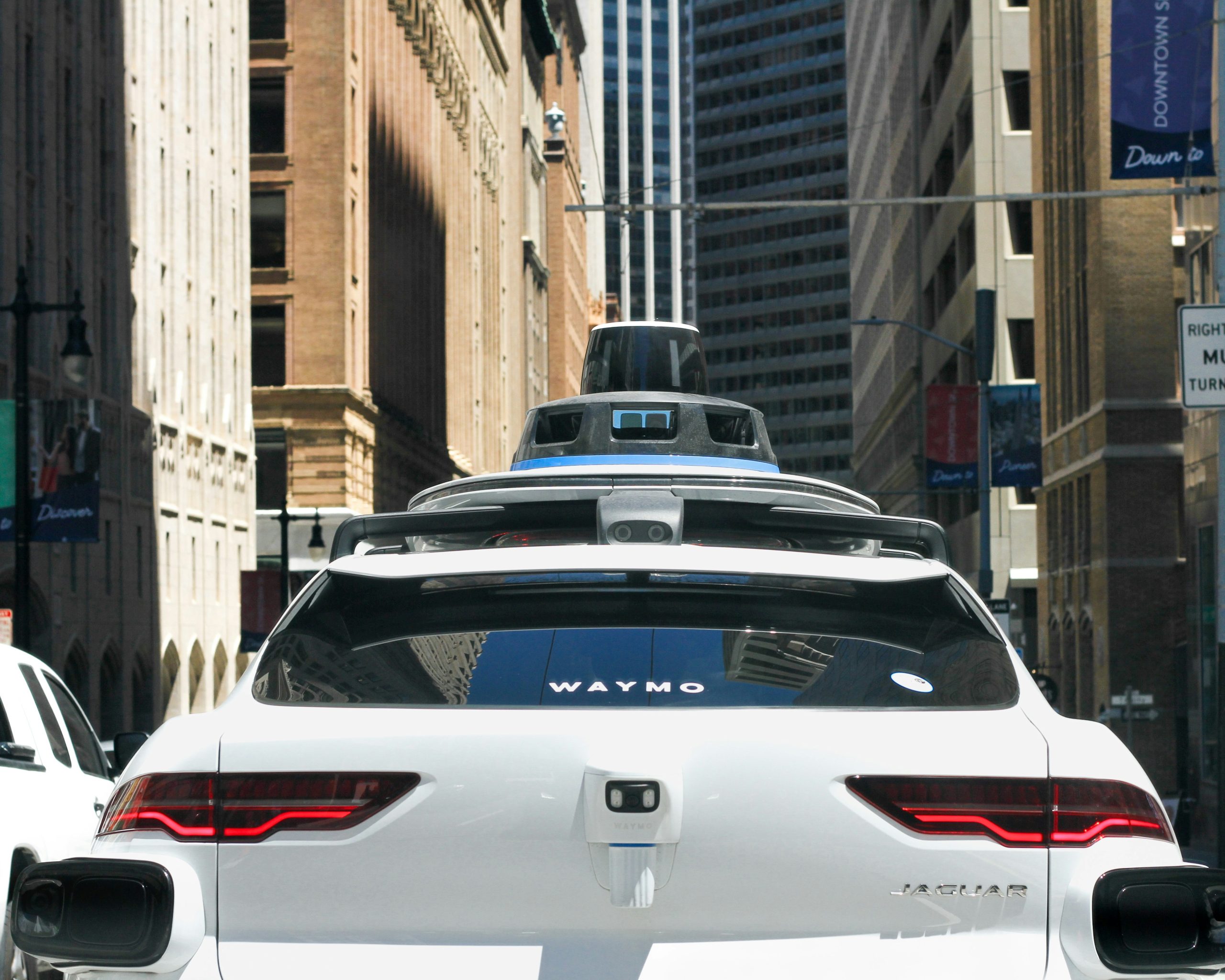
As self-driving vehicles and partially automated systems appear more and more on Georgia roads, they raise new legal questions, especially when a crash occurs. Unlike traditional accidents, an accident involving autonomous vehicle technology may not involve a human driver at all, which complicates the process of determining liability.
At Hoffspiegel Law, our Atlanta car accident attorneys are prepared to tackle the legal challenges that come with this major technological advancement. Here, we explain how Georgia defines autonomous vehicles, how fault is assessed, and what injured victims need to know after an autonomous vehicle accident.
What Qualifies as a Self-Driving or Autonomous Vehicle in Georgia?
Georgia law defines an autonomous vehicle as one equipped with an automated driving system (ADS) capable of handling all driving tasks without human input. These vehicles are classified by levels:
- Levels 0-2: Human driver remains fully responsible, even if the car assists with steering or speed
- Level 3: The system drives under specific conditions, but the human must take over when prompted
- Levels 4-5: The vehicle drives itself with no human oversight; a driver’s license isn’t required to operate it.
Since 2017, Georgia has allowed fully autonomous vehicles on public roads, provided they meet safety and insurance standards. This means a crash involving a self-driving car may involve multiple parties: the human driver, a software developer, and/or the vehicle manufacturer, depending on the specific circumstances and how the vehicle was operating at the time.
Overview of Georgia’s Laws on Autonomous Vehicles
Georgia has been a leader in autonomous vehicle legislation. In 2017, the state enacted Senate Bill 219, which permits fully self-driving cars on public roads, even without a human driver in the vehicle. To operate legally, these vehicles must meet specific registration, insurance, and safety requirements.
Unlike standard vehicles, autonomous models must be capable of entering a “minimal risk condition” if the system fails, i.e., pulling over and stopping safely. They must also carry higher insurance limits of at least $300,000 in bodily injury coverage per crash, compared to the $25,000 standard for human-operated cars.
Under Georgia law, an autonomous vehicle accident is treated similarly to traditional crashes, but liability may not fall on a human driver. If the vehicle was under full automation, fault may lie with the vehicle manufacturer, the software developer, or another entity, depending on how the system performed.
Legal frameworks are evolving alongside the technology. Georgia courts will no doubt soon face more legal challenges involving AI decision-making, data logs, and complex systems that aren’t yet fully addressed by traditional traffic laws.
Determining Liability in a Self-Driving Car Accident in Georgia
Liability in self-driving car accidents depends heavily on how the vehicle was operating at the time of the crash. Was the car fully autonomous, partially automated, or under direct human control? The answer affects whether fault lies with a human driver, a manufacturer, or even a software developer.
In Georgia, the standard fault rules still apply. That means the injured party must prove another person or entity acted negligently and caused the crash. But with autonomous vehicles, that negligence may come from a system error, poor programming, or failure to update software, not driver behavior alone.
Here are a few possible liability scenarios:
- If the human driver ignored system warnings or failed to intervene when required, they may be held liable.
- If the vehicle misread road conditions due to a system glitch, fault may shift to the vehicle manufacturer or the company behind the autonomous vehicle technology.
- If multiple parties contributed to the accident, Georgia’s modified comparative negligence rule allows injured victims to recover damages as long as they are less than 50% at fault.
Every crash involving autonomous vehicles is unique, more so because of the unique errors these systems can experience. Determining liability requires reviewing crash data, system logs, and camera footage, evidence which is not always available in conventional car accidents.
The Role of Product Liability in Autonomous Vehicle Accidents
When an autonomous vehicle malfunctions and causes a crash, liability can shift away from the driver and toward the companies that built or programmed the vehicle. In Georgia, these cases might lead to a product liability claim if the vehicle’s systems failed in a way that made it unsafe for ordinary use.
A sudden braking error, sensor failure, or poor decision by the car’s artificial intelligence could all point to flaws in design or software. In these cases, the vehicle manufacturer, a software developer, or another party involved in the vehicle’s automation may be held legally responsible.
Unlike traditional accident cases, these claims require a technical investigation: looking at data logs, system behavior, and how the car was designed to respond in certain situations. If the failure of the autonomous vehicle technology played a direct role in the crash, that could form the basis for a strong injury claim under Georgia law.
What to Do After a Self-Driving Car Accident in Georgia
Accidents involving autonomous vehicles are more complex than standard crashes. Here’s what you should do afterward to protect your health and your legal rights:
- Call 911 and report the accident: A police report will help document if the vehicle was in self-driving mode and who was involved.
- Get medical attention: Early treatment creates a medical record that supports your claim, even if injuries seem minor.
- Document the scene: Take photos of the vehicles, damage, road conditions, and any evidence suggesting autonomous vehicle technology was active.
- Exchange information: Get contact and insurance details from any drivers, and ask whether the vehicle was partially automated or fully autonomous.
- Avoid early contact with insurers: Don’t give recorded statements before consulting with an attorney, since these cases involve legal nuances that insurers can exploit.
- Contact an Atlanta car accident attorney: These cases may require reviewing data logs, system records, or software errors. A lawyer familiar with self-driving car accidents can help preserve evidence and pursue the right type of claim.
How Atlanta Car Accident Lawyers at Hoffspiegel Law Can Help
If you were injured by a fully self-driving car, a partially automated system, or a vehicle using advanced driver-assist features, your case might involve multiple layers of responsibility and multiple potential defendants.
At Hoffspiegel Law, our Atlanta car accident attorneys are well-equipped to handle the legal and technical challenges these cases present. We work with experts to analyze crash data, evaluate the role of artificial intelligence, and identify whether a vehicle manufacturer, software developer, or human driver is at fault.
We also understand the pressure victims face after a serious accident, which includes medical bills, time away from work, and uncertainty about what to do next. That’s why we offer a free consultation and don’t charge any fees unless we recover compensation on your behalf.
If you were injured in an autonomous vehicle accident, contact us today. Our team can help you understand your options, build a strong claim, and fight for the full recovery you deserve.
Send a Message
To The Hoffspiegel Law Team